Your Cart is Empty

The most common question about single-use is what happens to it. Purifas Hospital Bed Linen is made from a single, high-quality polymer — polypropylene — so it can be recovered and recycled, not sent to landfill. And we can help you set up a recovery pathway that fits your facility.
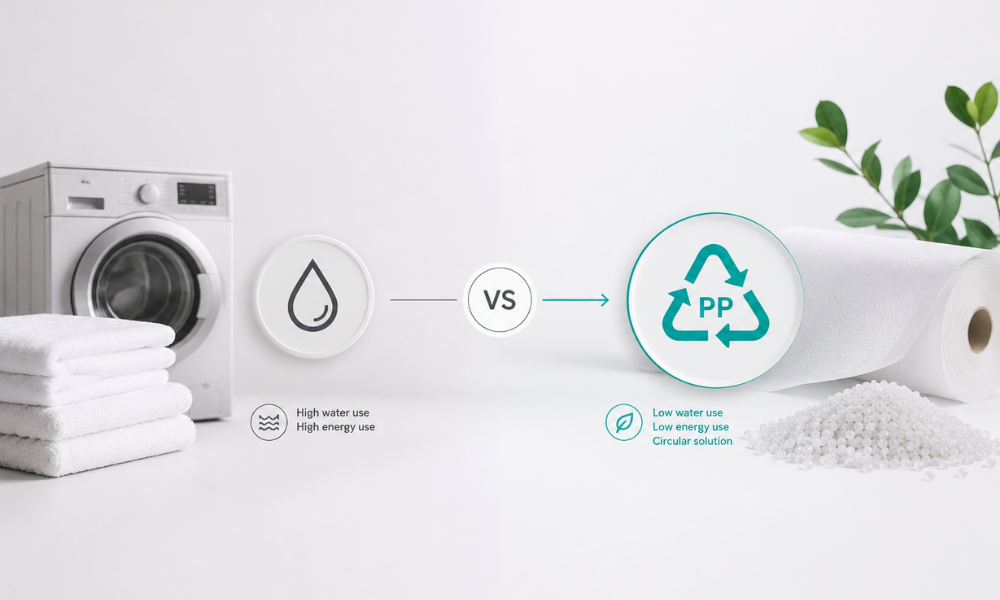
The footprint of any linen choice comes down to its full lifecycle. Laundering isn’t “free” either — every cycle draws water, energy and chemicals, in a hospital without end. What really separates the options is whether the material is recovered and kept in use rather than wasted. Purifas is a single polymer, built for exactly that.
We compare laundering and recycling in full on our blog — Laundry vs Recycling: what’s actually greener →
A life-cycle assessment by the University of Technology Sydney and UNSW (for Circular Australia) measured the carbon of producing polypropylene from recovered hospital PP versus making it new:
Source & scope: “Achieving Circularity,” UTS & UNSW for Circular Australia (2025). Compares recycled-vs-virgin polypropylene production; emissions vary by state grid; recovered material is remanufactured into new products.
Recovered Purifas linen is collected, decontaminated and processed into clean polypropylene — then remade into new PP products for hospitals and beyond. The material stays in use, not sent to landfill.
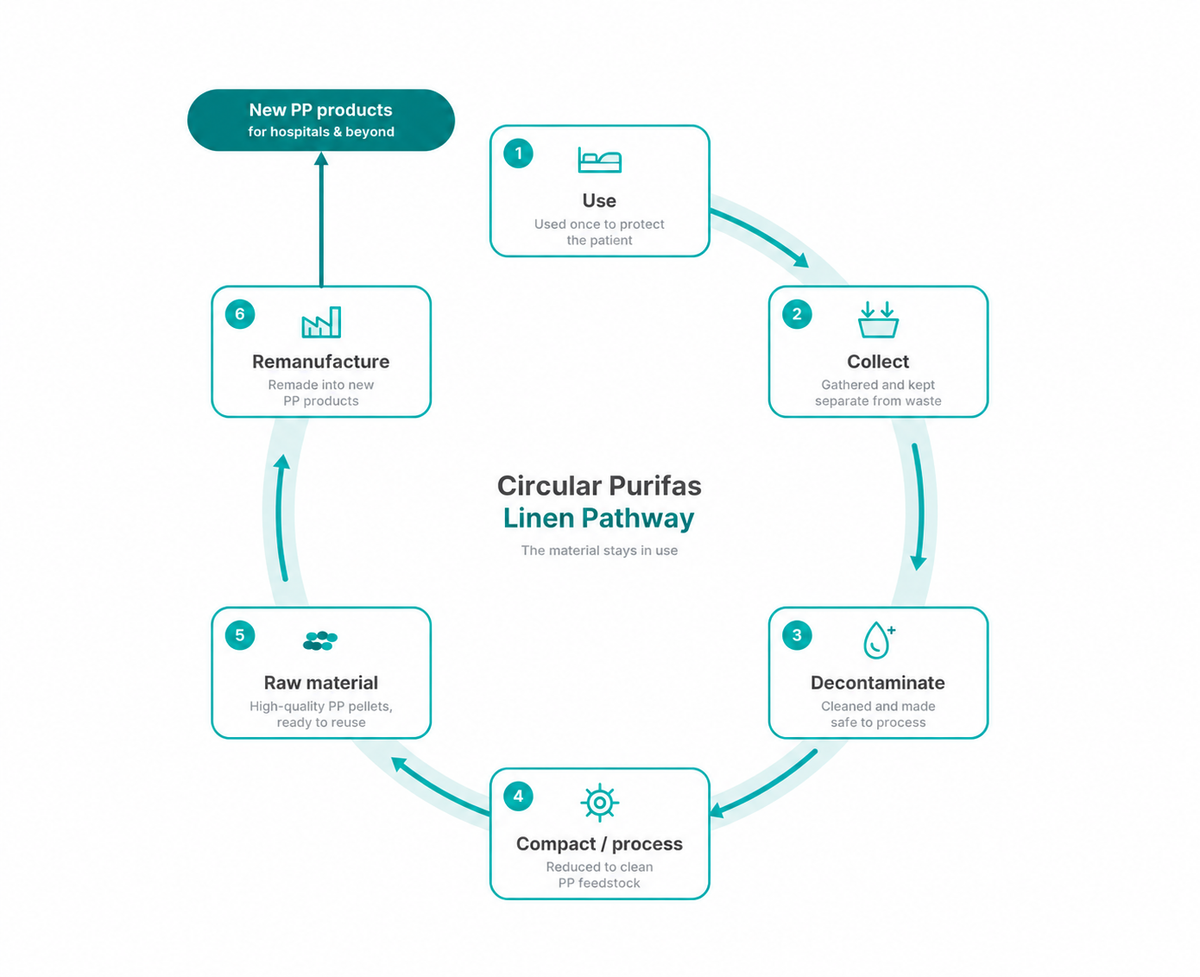
Recovering the material delivers real outcomes:
Every facility’s volumes and waste arrangements are different, so the right recovery route is too. We’ll work through the options with you and help establish a pathway that fits.
The five hidden costs of laundering, a side-by-side comparison and a decision framework — on the Purifas blog.


The Dream Topper story continues with a new extended face cradle version designed specifically for horseshoe-style or contoured therapy beds. Built from therapist feedback, it delivers the same premium comfort, hygiene and presentation as the original — now in a cradle-specific design that supports a smoother, more natural prone position. Part of the Purifas zero-towel solution, it helps reduce towel use, streamline hygiene and elevate every client experience.


Therapists often assume reusable automatically means sustainable — especially with towels. But when you look at the full lifecycle, laundry carries hidden water, energy, chemical and time costs that add up fast. This blog breaks down the real environmental impact of laundering versus recycling polypropylene, and shows why the greener choice isn’t about reusable vs single‑use in theory, but about which pathway actually reduces harm in a busy clinic.


 Pay $0 today
 Trial
Trial
 Pay
Pay